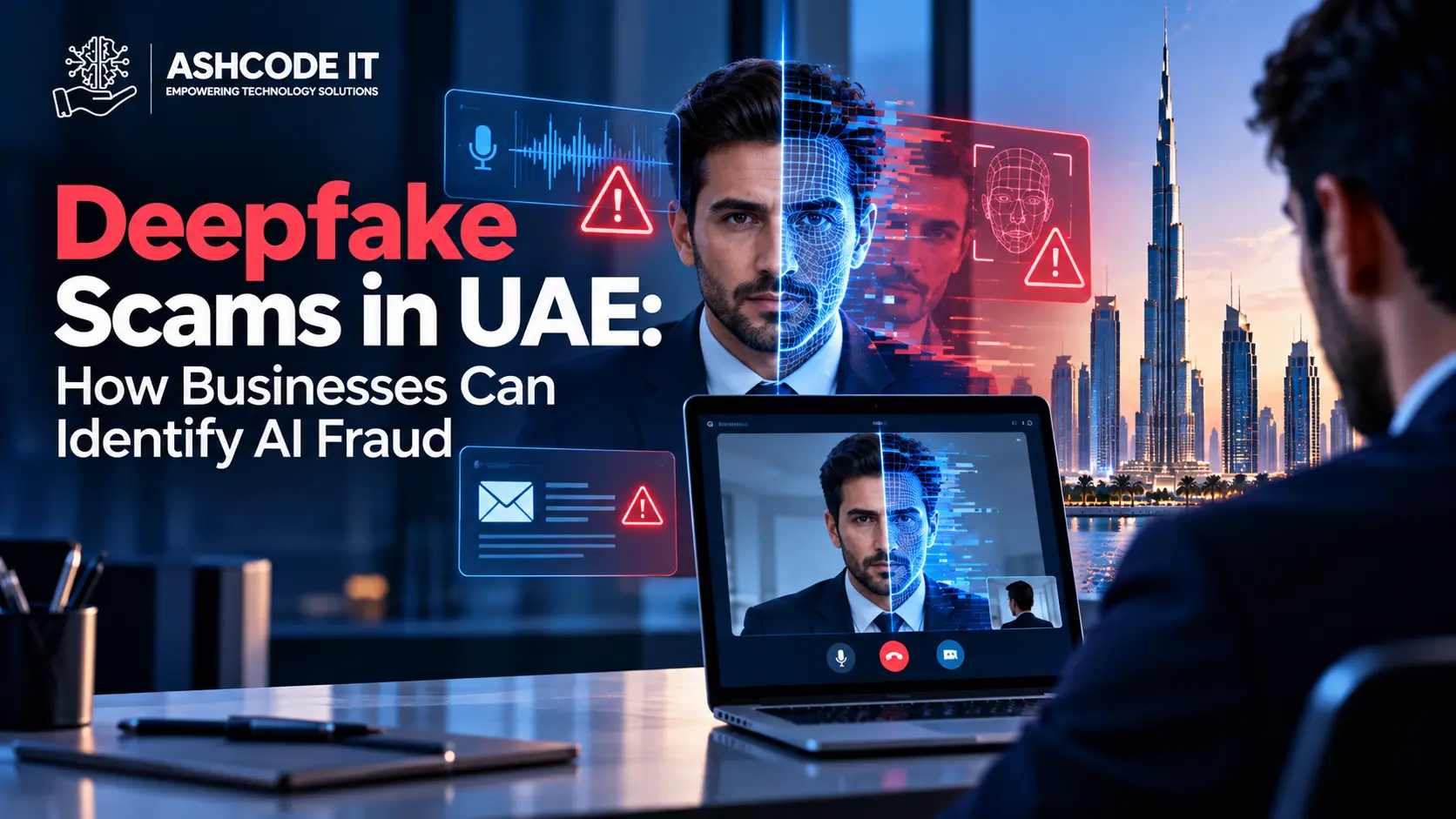
Deepfake Scams in UAE are becoming a serious cybersecurity concern for businesses. Artificial intelligence can now generate realistic voices, videos, and images that impersonate company executives, employees, and suppliers. Cybercriminals use these technologies to manipulate financial transactions, steal confidential information, and gain unauthorized access to business systems.
For organizations in Dubai, Sharjah, Abu Dhabi, and across the UAE, understanding deepfake fraud is essential for protecting business operations.
What Are Deepfake Scams?
Deepfake scams involve AI-generated or manipulated media designed to make someone appear to say or do something they never actually said or did.
Using voice cloning and video manipulation, fraudsters can imitate business owners, managers, and financial representatives.
Unlike traditional phishing, Deepfake Scams in UAE may involve convincing phone calls or video meetings, making fraudulent requests appear legitimate.
How Deepfake Scams Target UAE Businesses
1. CEO Voice Cloning Scams
Cybercriminals can use publicly available recordings to imitate a CEO’s voice.
An employee might receive an urgent call requesting a payment to an unfamiliar bank account.
Because the voice sounds familiar, employees may approve transactions without proper verification.
2. Fake Video Conference Meetings
AI-generated video can impersonate senior executives during online meetings.
Attackers may request confidential documents, financial information, or immediate payments.
Businesses should never approve sensitive transactions based solely on someone’s appearance during a video call.
3. Supplier Payment Fraud
Fraudsters may impersonate suppliers and request changes to payment details.
AI-generated voice messages can make these requests more convincing.
Companies should independently confirm changes using previously verified contact information.
4. AI-Powered Phishing Attacks
Artificial intelligence helps criminals create personalized phishing emails with convincing language.
These messages may impersonate banks, government departments, or business partners.
Effective AI fraud prevention UAE practices require employee awareness and strong communication verification procedures.
Warning Signs of Deepfake Scams
Identifying deepfake fraud requires attention to both technical clues and suspicious behavior.
Potential warning signs include:
Unexpected requests for urgent financial transfers
Instructions to bypass approval procedures
Unusual requests for passwords or confidential information
Changes to supplier banking details
Calls from unfamiliar accounts or numbers
Pressure to keep transactions confidential
Unnatural facial movements, inconsistent audio, or unusual lighting can sometimes indicate manipulated content. However, advanced deepfakes may not display obvious visual problems.
Why Deepfake Fraud Is Dangerous for UAE Companies
Deepfake Scams in UAE can cause financial losses, data breaches, and business disruption.
A successful impersonation attack may compromise customer records, employee information, or confidential contracts.
Stolen credentials can also provide attackers with access to Microsoft 365 accounts, company networks, and cloud applications.
Businesses should recognize deepfake fraud as both a financial and cybersecurity risk.
How Businesses Can Prevent Deepfake Scams
1. Establish Payment Verification Procedures
Every significant financial transaction should follow documented approval procedures.
Unexpected payment requests must be confirmed through independently verified communication channels.
2. Conduct Cybersecurity Awareness Training
Employees should understand how AI voice cloning, fake video meetings, and phishing attacks operate.
Regular training helps finance teams, managers, and administrative staff recognize suspicious requests.
3. Enable Multi-Factor Authentication
Multi-factor authentication provides additional protection against unauthorized account access.
Phishing-resistant authentication methods offer stronger protection where supported.
4. Strengthen Email and Endpoint Security
Email security tools can identify suspicious links, malicious attachments, and spoofed messages.
Endpoint protection helps defend business devices against malware and other threats.
These controls complement, rather than replace, human verification.
5. Develop an Incident Response Plan
Businesses should establish clear procedures for reporting suspected fraud.
If a suspicious payment occurs, employees should immediately contact their bank, preserve evidence, and inform the company’s security team.
Deepfake Fraud Prevention in Dubai and UAE
Organizations should include AI impersonation threats in their cybersecurity assessments.
Finance departments, procurement teams, and employees managing sensitive information require particular attention.
Combining technical protection with strong approval procedures can reduce exposure to Deepfake Scams in UAE.
Protect Your Business with Ashcode IT
Ashcode IT provides cybersecurity solutions for businesses in Dubai, Sharjah, Abu Dhabi, and across the UAE.
Our services include firewall solutions, endpoint security, email protection, network security, and IT security assessments.
Strengthen your business security against phishing, unauthorized access, and AI-driven cyber threats.
Contact Ashcode IT
Phone: +971 50 915 4423
Email: [email protected]
Website: www.ashcodeit.com
Frequently Asked Questions
What are deepfake scams in UAE?
Deepfake scams use artificial intelligence to impersonate individuals through manipulated audio, video, or images for fraudulent purposes.
Can AI clone a company CEO’s voice?
Yes. AI voice cloning technology can imitate recognizable speech characteristics using available audio recordings.
How can businesses detect deepfake fraud?
Businesses should verify unusual requests independently, follow payment approval procedures, and train employees to recognize impersonation attempts.
Can cybersecurity software prevent every deepfake attack?
No. Security tools provide useful protection, but independent identity verification and employee awareness remain essential.
Conclusion
Deepfake Scams in UAE demonstrate how artificial intelligence is changing business fraud. Realistic voices and videos can make impersonation attacks difficult to recognize.
Businesses can reduce their exposure through employee training, financial verification procedures, strong authentication, and effective cybersecurity controls.