Why Identity Based Cyber Attacks Are Increasing in UAE

Identity Based Cyber Attacks in UAE

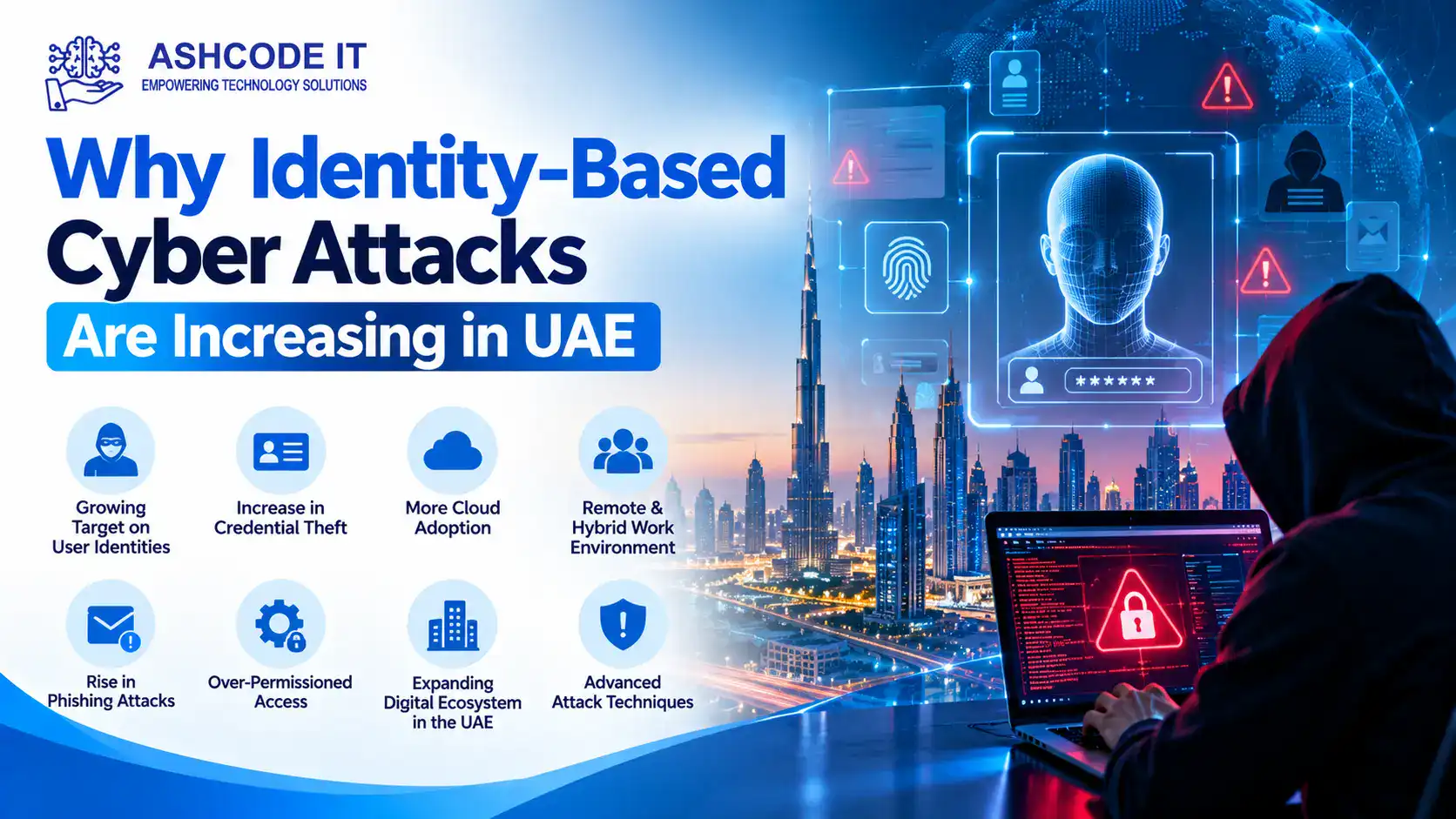
Identity-based cyber attacks in UAE are becoming a major concern for businesses that depend on cloud applications, corporate email, remote access, and digital business systems. Instead of breaking through network defences directly, attackers increasingly target employee credentials, login sessions, and digital identities to gain access to company resources.

In April 2026, the UAE Cyber Security Council highlighted the growing risks to digital identities as businesses and individuals increasingly use AI tools, connected devices, and cloud applications. The Council also warned about phishing messages designed to steal credentials and enable fraud. 

What Are Identity-Based Cyber Attacks?

Identity-based attacks occur when criminals steal, misuse, or impersonate legitimate user credentials to access systems without authorization.

Common examples include:

  • Phishing and credential theft

  • Business email compromise

  • Password spraying and credential stuffing

  • Multi-factor authentication (MFA) fatigue attacks

  • Stolen session tokens

  • Executive impersonation and identity fraud

These attacks can be difficult to identify because the activity may appear to come from a legitimate employee account.

Why Are Identity-Based Attacks Increasing in the UAE?

1. Greater Dependence on Cloud Applications

Businesses use Microsoft 365, cloud storage, online accounting platforms, customer management systems, and remote access tools. A compromised account can expose several connected services if permissions are not properly restricted.

2. More Convincing Phishing Messages

Attackers use realistic emails, text messages, and messaging applications to imitate banks, suppliers, colleagues, or service providers. AI tools can help criminals produce more convincing messages and adapt them to a target.

The UAE Cyber Security Council reported in April 2026 that more than 75% of cyber breaches begin with phishing emails or fraudulent messages, highlighting the importance of protecting login credentials. 

3. Weak or Reused Passwords

Employees who reuse passwords across personal and business accounts may expose company systems when another service suffers a data breach. Automated attacks can test stolen credentials against other platforms.

Strong, unique passwords and secure authentication methods reduce this risk.

4. Remote Access and Third-Party Accounts

Employees, contractors, IT support providers, and business partners may have access to company systems. If an account is compromised or remains active after access is no longer required, attackers may exploit it to reach sensitive information.

5. Impersonation Using AI

AI-generated messages, cloned voices, and convincing impersonation attempts can make fraudulent requests appear genuine. Attackers may pretend to be executives requesting urgent payments or employees asking for password resets.

Businesses should verify unusual requests through a separate, trusted communication channel.

How Identity-Based Attacks Affect Businesses

A compromised identity can create several operational and financial risks.

  • Data exposure: Attackers may access confidential documents, customer records, and business emails.

  • Financial fraud: Stolen accounts can be used to redirect payments or impersonate suppliers.

  • Ransomware: Compromised credentials may provide an entry point for further attacks.

  • Business disruption: Unauthorized changes to accounts or systems can interrupt daily operations.

  • Reputational damage: Customers and partners may lose confidence after a security incident.

The impact depends on the account’s permissions, the systems it can access, and how quickly suspicious activity is detected.

How UAE Businesses Can Prevent Identity-Based Cyber Attacks

Enable Multi-Factor Authentication

Require MFA for email, cloud services, administrator accounts, and remote access. Where possible, use phishing-resistant methods such as passkeys or security keys.

Strengthen Identity and Access Management

Apply least-privilege access, review permissions regularly, and remove accounts when employees or contractors no longer need them. Use separate administrator accounts for privileged tasks.

Monitor Suspicious Login Activity

Look for unusual sign-in locations, repeated failed logins, unfamiliar devices, unexpected MFA prompts, and suspicious changes to mailbox rules or account permissions.

Train Employees to Recognize Impersonation

Conduct practical awareness training covering fake login pages, suspicious attachments, urgent payment requests, and unexpected authentication prompts.

Prepare an Incident Response Plan

If an account is compromised, security teams should revoke active sessions, reset credentials securely, review access logs, investigate mailbox and permission changes, and assess whether data was accessed or copied.

How Ashcode IT Can Help

Ashcode IT provides cybersecurity, IT infrastructure, networking, and technical support for businesses in Dubai and across the UAE. Businesses can discuss identity protection, access management, endpoint security, and security monitoring requirements with the team.

Contact Ashcode IT

Frequently Asked Questions

What is an identity-based cyber attack?

It is an attack that uses stolen credentials, compromised sessions, or impersonated identities to gain unauthorized access to systems or data.

Why are identity-based attacks a concern for UAE businesses?

Cloud adoption, remote access, phishing, and increasingly convincing impersonation attempts create opportunities for attackers to misuse employee and administrator accounts.

Can MFA prevent identity-based attacks?

MFA can significantly reduce the risk of account compromise, but not every method is equally resistant to phishing. Phishing-resistant authentication offers stronger protection against many credential theft techniques.

What should a business do after an account is compromised?

Secure the account, revoke active sessions, investigate suspicious activity, review access permissions, and determine whether sensitive data was exposed. Escalate the incident according to the organization’s response plan and applicable obligations.

Conclusion

Identity-based cyber attacks in UAE are a growing security concern because digital identities provide access to email, cloud applications, business data, and critical systems. Protecting these identities requires more than strong passwords. Businesses should combine secure authentication, restricted permissions, employee awareness, monitoring, and a tested incident response process.

Taking these steps helps reduce the risk of unauthorized access and supports stronger business security.

Scroll to Top